KERALA ROOFTOP SOLAR GUIDE · UPDATED SEPTEMBER 2026
PM Surya Ghar Subsidy & KSEB Net-Metering in Kerala
How to get up to ₹78,000 off your rooftop solar and connect it to the KSEB grid — explained step by step, with the documents you need and how long each stage takes.
THE SHORT ANSWER
Two things every Kerala home needs to know
PM Surya Ghar: Muft Bijli Yojana is the Government of India scheme that pays a subsidy directly into your bank account when you install rooftop solar on your home. The maximum is ₹78,000 for a system of 3 kW or more.
KSEB net-metering is what lets your solar system work with the KSEB grid. A special two-way meter records the power you use from KSEB and the extra solar power you send back. The extra units are adjusted against what you use, so your bill comes down.
Both happen together: you apply once on the national PM Surya Ghar portal, and the application goes to KSEB for approval and net-metering.
At a glance
- Subsidy: up to ₹78,000 per home
- Who: homes with their own KSEB domestic connection
- Where to apply: pmsuryaghar.gov.in
- Total time: usually 1½ to 3 months, start to subsidy
- Subsidy paid: to your bank account after commissioning
HOW MUCH SUBSIDY WILL I GET?
PM Surya Ghar subsidy amounts
₹30,000 per kW for the first 2 kW, plus ₹18,000 for the 3rd kW. Systems bigger than 3 kW still get ₹78,000 (the maximum).
1 kW system
₹30,000
Suits homes using up to about 150 units a month
2 kW system
₹60,000
Suits homes using about 150–300 units a month
3 kW & above
₹78,000
Suits homes using more than 300 units a month
Flats / housing societies
₹18,000/kW
For common areas (lifts, lights, pumps), up to 500 kW
Who can apply: an Indian household that owns the house, has its own domestic electricity connection in the family's name, a suitable roof, and has not already taken another government solar subsidy. Panels must be made in India (DCR) and bought through a registered vendor.
STEP BY STEP
How the process works in Kerala
From your first application to the subsidy in your bank — 7 steps. The time shown for each step is typical; KSEB section offices can be faster or slower.
1Register on the national portal
Go to pmsuryaghar.gov.in. Choose Kerala, choose KSEB, and enter your 13-digit consumer number, mobile number and email. Log in and fill the rooftop solar application.
Time: about 15 minutes
2KSEB checks feasibility
Your application goes to the KSEB section office. They check that your connection and the local transformer can take the solar system, then give feasibility approval online.
Time: usually within 15 days of a complete application
3Choose a registered vendor & site survey
Pick a vendor registered for your area on the portal. The vendor visits your home, checks the roof and shade, looks at your bills and recommends the right system size and price.
Time: 1–3 days
4Installation
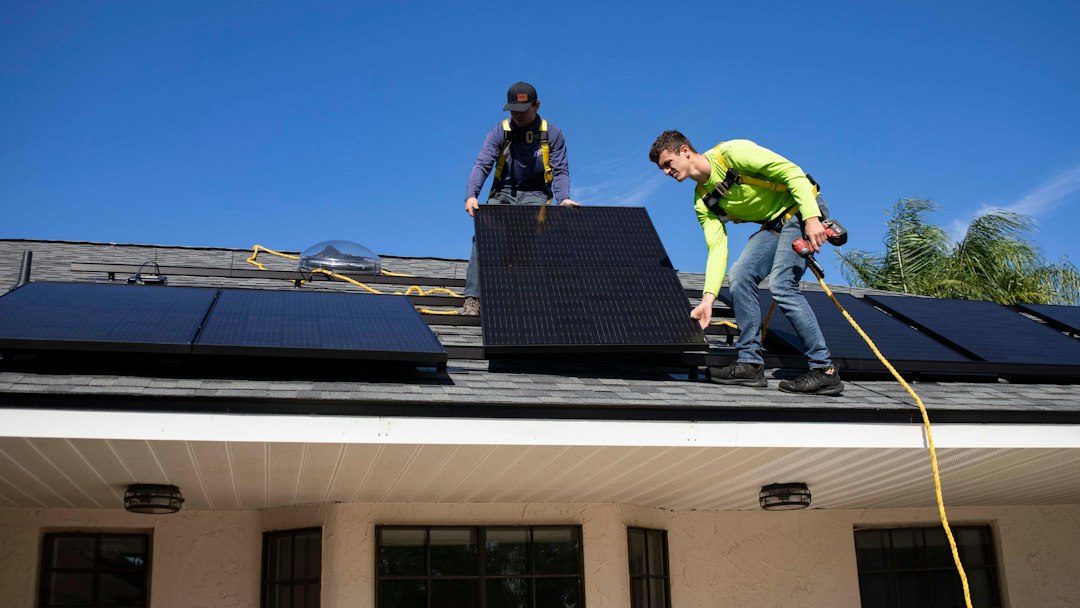
The vendor installs the made-in-India (DCR) panels, inverter, structure, earthing and safety devices. Most home systems are fitted in 1–3 days once materials arrive.
Time: 1–2 weeks including material delivery
5Submit installation details & apply for net meter
The installation details, photos and equipment certificates are uploaded on the portal, and the net-metering request goes to KSEB.
Time: 1–2 days
6KSEB inspection, net meter & commissioning
KSEB inspects the system, fits the two-way (bi-directional) net meter and switches it on. A commissioning certificate is then issued on the portal.
Time: usually 2–4 weeks
7Enter bank details & receive the subsidy
After commissioning, log in to the portal and submit your bank account details and a cancelled cheque (or passbook copy). The subsidy is paid directly into your account.
Time: usually within about 30 days of submitting bank details
Total: most Kerala homes go from application to subsidy in about 1½ to 3 months.
DOCUMENTS CHECKLIST
Which documents do I need?
From you (the home owner)
- Latest KSEB electricity bill (with 13-digit consumer number)
- Aadhaar card of the connection holder
- Mobile number and email ID
- Proof of house ownership (e.g. building tax receipt)
- Bank passbook or cancelled cheque (account in the applicant's name)
- Passport-size photo, if asked
Prepared by your vendor (AGEMS does this for you)
- System design and wiring (single-line) diagram
- Panel and inverter details with test certificates
- DCR (made-in-India) certificate for the solar panels
- Photos of the installed system
- Work completion report and invoice
- Net-metering agreement and forms for KSEB
Tip: make sure the name on the electricity bill, Aadhaar and bank account match. Name mismatches are the most common reason for subsidy delays.
KSEB NET-METERING EXPLAINED
How net-metering lowers your KSEB bill
During the day your panels power your home first. Any extra power flows out to the KSEB grid. At night, or on cloudy days, you take power from KSEB as usual.
The two-way net meter records both directions. Each billing period, the units you exported are adjusted against the units you used, and you pay only for the difference. Unused extra units carry forward, and any balance at the end of the settlement year is paid for by KSEB at the rate fixed by the Kerala State Electricity Regulatory Commission (KSERC).
- Homes can use net-metering for systems up to 20 kW (within your connected load)
- Systems up to 10 kW pay no grid support charge under KSERC's 2025 rules
- Systems above 3 kW normally need a three-phase connection and inverter
FREQUENTLY ASKED QUESTIONS
Subsidy & net-metering FAQs
Do I pay the full price first and get the subsidy later?
Yes. You pay the vendor for the system, and the subsidy is credited to your bank account after KSEB commissions the system. Low-interest bank loans are available under the scheme if you prefer not to pay the full amount upfront.
Can I get the subsidy if I install first and apply later?
No. You must register on the portal and get KSEB feasibility approval before installation. Systems installed without this are not eligible.
Can shops, offices or businesses get the subsidy?
No — PM Surya Ghar is only for residential (domestic) connections. Shops, offices and factories can still install solar with KSEB net-metering and save on their bills, just without this subsidy.
What size system do I need?
As a rough guide in Kerala, 1 kW produces about 4 units a day (around 120 units a month). Look at your bimonthly KSEB bill, divide by two for the monthly use, and we'll size the system during the free site survey.
Will my solar work during a power cut?
A standard on-grid system switches off during a power cut for safety. If you want backup, choose a hybrid system with batteries — ask us about it.
Does AGEMS handle the paperwork?
Yes. We guide you through the portal registration and prepare and follow up all the technical documents, KSEB net-metering forms and inspection — so you don't have to visit offices.
Scheme rules, subsidy amounts and KSEB procedures are set by the Government of India, KSEB and KSERC and can change. Information on this page was checked in September 2026 — please confirm current details on pmsuryaghar.gov.in or with us before you apply.
Let us handle your subsidy and net-metering
Book a free site survey in Thiruvananthapuram. We'll size your system, explain the subsidy you qualify for, and take care of the KSEB process end to end.